Hey everyone! If you’re anything like me, you’ve poured countless hours into perfecting your TESOL lesson plans, hoping to inspire future educators. But let’s be real, translating all that fantastic theory into genuinely impactful, real-world classroom practice can feel like navigating a maze blindfolded.

I vividly remember those early practical sessions – a mix of pure excitement and a tiny bit of panic, wondering if I was truly giving my students the tools they’d need.
It’s tough to bridge the gap between what’s written in a textbook and the dynamic, often unpredictable, reality of a language classroom. Especially now, with blended learning and AI tools transforming education, our practical guidance needs to be sharper and more relevant than ever.
This isn’t just about delivering information; it’s about equipping your students, who will soon be teachers themselves, with the confidence and adaptable skills to truly shine in any setting.
After years of experimenting with various approaches and learning from both glorious successes and the occasional teaching ‘oops,’ I’ve gathered some game-changing insights that I honestly wish someone had shared with me from day one.
It’s all about creating an environment where future English language teachers can confidently apply what they’ve learned, embrace mistakes as learning opportunities, and develop their unique teaching voice.
Let’s dive deeper and uncover how to make your TESOL practical sessions not just informative, but absolutely transformative and memorable, preparing them for the diverse and exciting world of teaching.
Cultivating a Dynamic Classroom Presence
When you’re first stepping into that teaching role, whether it’s in a simulated environment or with actual language learners, one of the biggest challenges, and perhaps the most exciting one, is finding your unique classroom presence.
It’s not just about what you say, but *how* you say it, how you move, and the energy you bring to the room. I vividly remember my early days, feeling a bit stiff and overly rehearsed, clinging to my lesson plan like a lifeline.
But over time, I discovered that genuine enthusiasm is infectious. It’s about being authentic and allowing your personality to shine through, even when you’re explaining a tricky grammar point.
Think about those teachers who really inspired you; they likely had a way of making you feel seen, heard, and excited to learn. Encouraging your students to experiment with different teaching personas – from energetic facilitator to calm guide – can truly transform their confidence.
It’s like finding your groove on a dance floor; it takes practice, but once you find it, it feels natural and powerful. We’re aiming for teachers who don’t just deliver content, but who *perform* it in a way that captivates and motivates.
Embracing Non-Verbal Communication
It’s amazing how much we communicate without uttering a single word. In a language classroom, especially with learners who might be struggling with verbal cues, your body language, eye contact, and gestures become incredibly powerful tools.
I’ve personally found that a simple nod of encouragement or a warm smile can instantly make a hesitant student feel more comfortable participating. During our practical sessions, I always push my trainees to record themselves, not just to hear their voice, but to *see* their physical presence.
Are they slouching? Are they making eye contact with everyone, or just a select few? Do their gestures enhance their explanations or distract from them?
It’s often a real eye-opener. It’s about developing a conscious awareness of how you occupy the space and how that impacts the learning environment. This isn’t about being theatrical, but about being intentionally communicative with your entire self, fostering connection and clarity.
Finding Your Authentic Voice and Energy
We all have that inner critic, especially when we’re learning a new skill like teaching. For future TESOL educators, finding their authentic teaching voice goes beyond just speaking clearly; it’s about connecting with their passion for language and learning.
I remember one trainee who was incredibly knowledgeable but spoke in a monotone, making even exciting topics sound dull. After some reflection and practice, we worked on bringing more inflection, varying pace, and allowing her genuine excitement for linguistics to bubble to the surface.
It wasn’t about faking it; it was about *releasing* what was already there. Your voice is a powerful instrument. How you modulate it, where you pause, and how you emphasize key points can drastically alter engagement.
We practice different voice exercises and encourage them to speak from the heart, not just from the script, understanding that genuine connection is what truly resonates with students.
Mastering the Art of Constructive Feedback
Giving feedback effectively is arguably one of the most challenging yet crucial skills a teacher can develop. It’s not just about pointing out mistakes; it’s about guiding growth, fostering self-correction, and maintaining a student’s motivation.
I’ve seen feedback sessions go horribly wrong, leaving trainees feeling discouraged rather than enlightened, and I’ve also witnessed the magic when feedback transforms a hesitant individual into a confident practitioner.
The key, I’ve learned through countless hours of trial and error, is to make it specific, actionable, and delivered with genuine empathy. It’s a delicate balance, much like tending a garden – you need to prune the weeds, but you also need to nurture the blossoms.
We explore various feedback models, from peer-to-peer assessment to self-reflection, ensuring that future teachers not only know how to receive feedback but also how to give it in a way that truly empowers their students.
My ultimate goal is for them to become masters of the feedback loop, creating a continuous cycle of improvement.
Strategies for Empowering Peer Feedback
One of the most potent learning tools in any practical session is peer feedback. When students learn to critique each other’s teaching, they develop a critical eye and a deeper understanding of what makes a lesson effective.
However, it’s not as simple as just saying, “Give each other feedback!” I’ve found that without clear guidelines and practice, peer feedback can easily devolve into vague compliments or overly harsh criticisms.
We spend significant time on *how* to frame feedback constructively: focusing on specific observations rather than generalizations, offering suggestions instead of just pointing out flaws, and always starting with something positive.
We use specific rubrics and sentence starters to guide their discussions. For example, “I noticed that you…, and perhaps you could try…” rather than “You were too quiet.” This structured approach helps them internalize the process, making it less intimidating and far more beneficial.
It’s about building a supportive community where everyone feels safe to learn and grow.
The Power of Self-Reflection and Video Analysis
Before anyone else’s critique, the most powerful feedback often comes from within. Encouraging future teachers to critically evaluate their own performance is an invaluable skill.
In my practical sessions, video recording is non-negotiable. It’s amazing how different a lesson feels when you’re in the thick of it versus watching yourself back.
I’ve seen students gasp, laugh, and even wince at their own teaching clips. This self-confrontation, while sometimes uncomfortable, is incredibly powerful.
It allows them to objectively identify their strengths, pinpoint areas for improvement, and notice nuances they missed in the moment. We guide them with reflective prompts: “What was your goal for this activity, and did you achieve it?”, “How did you manage that unexpected student response?”, or “What might you do differently next time?” This process develops a habit of metacognition, transforming them into lifelong reflective practitioners who can continually refine their craft independently.
Designing Engaging, Real-World Lesson Scenarios
Let’s be honest, there’s a world of difference between a theoretically sound lesson plan and one that truly comes alive in a classroom. For me, the magic happens when we bridge that gap, crafting scenarios that don’t just teach language but make it relevant and exciting.
It’s about moving beyond textbook exercises to create experiences that mirror real-life communication. I recall a time when my trainees were struggling to make conditional sentences engaging.
Instead of just drilling, we designed a mock debate on local community issues, requiring them to use various conditional forms to present arguments and counter-arguments.
The energy in the room was palpable, and the learning was deeply embedded because it felt meaningful. This approach isn’t always easy; it requires creativity, adaptability, and a willingness to sometimes deviate from the “perfect” plan.
But seeing the lightbulb moments when students connect language to their world? That’s what makes it all worthwhile.
Crafting Authentic Tasks and Activities
The heartbeat of any language lesson is its activities. But are they just busywork, or are they genuinely pushing learners to use the language authentically?
In our TESOL practicals, we really drill down into task-based learning. It’s about designing activities where the focus isn’t just on grammar rules, but on completing a meaningful task using the target language.
For instance, instead of filling in blanks with past tense verbs, we might have them role-play a police interrogation where they have to recount events chronologically.
Or, to practice persuasive language, they might create an advertising campaign for a new local business, presenting their ideas to the “investors.” My personal experience has shown that when students feel a real purpose behind their language use, their engagement skyrockets, and the language acquisition becomes far more natural and lasting.
It transforms a potentially mundane lesson into an immersive experience.
Integrating Local Context and Cultural Relevance
Teaching English globally means acknowledging and respecting the diverse contexts in which it’s learned and used. A mistake I often see is a “one-size-fits-all” approach to lesson planning, ignoring the unique cultural backgrounds and local realities of students.
In our practical sessions, we heavily emphasize the importance of localization. This means encouraging future teachers to infuse their lessons with examples, topics, and scenarios that are directly relevant to their students’ lives and cultures.
If they’re teaching in Mexico, for example, discussing local festivals or traditional foods might be far more engaging than talking about Thanksgiving in the US.
It’s not just about making lessons relatable; it’s about validating students’ identities and showing them that English can be a tool for expressing *their* world, not just ours.
This approach not only boosts engagement but also fosters a deeper, more respectful learning environment.
Leveraging Technology for Enhanced Learning Experiences
Let’s face it, we’re living in an increasingly digital world, and the language classroom is no exception. Gone are the days when a whiteboard and a few markers were the peak of classroom tech!
Today, we have an incredible array of tools at our fingertips, from AI-powered language apps to interactive online platforms. Initially, I felt a bit overwhelmed by the sheer volume of options, but over time, I’ve learned that the key isn’t to use *all* the tech, but to use the *right* tech strategically.
Integrating technology into TESOL practicals isn’t just about making lessons “modern”; it’s about expanding learning opportunities, personalizing instruction, and preparing future teachers for the tech-rich environments they’ll inevitably encounter.
My goal is to equip them with the confidence to not only use these tools effectively but also to critically evaluate when and why they’re beneficial, moving beyond novelty to truly enhance learning outcomes.
Integrating AI Tools Responsibly and Effectively
AI is no longer a futuristic concept; it’s here, and it’s rapidly transforming education. For TESOL, this means exploring tools that can assist with pronunciation practice, grammar checks, vocabulary expansion, and even generating personalized practice scenarios.
I’ve personally experimented with various AI writing assistants for brainstorming lesson ideas and found them to be surprisingly helpful jumping-off points.
However, the critical aspect is teaching future educators how to use these tools *responsibly*. It’s about leveraging AI as an *assistant* to enhance their teaching, not as a replacement for human interaction and creativity.
We discuss the ethical implications, data privacy, and the importance of maintaining human connection in a tech-driven classroom. The focus is on using AI to free up time for more meaningful teacher-student interaction and to provide individualized support that might otherwise be impossible.
Utilizing Multimedia and Interactive Platforms
The modern learner, especially younger generations, is highly visual and accustomed to dynamic content. Sticking solely to text-based materials can quickly lead to disengagement.
This is where multimedia shines! Videos, podcasts, interactive simulations, and digital games can bring language to life in ways textbooks simply can’t.
In our practical sessions, we explore platforms like Kahoot! for vocabulary review, Padlet for collaborative brainstorming, and even creating short instructional videos using tools like Screencastify.
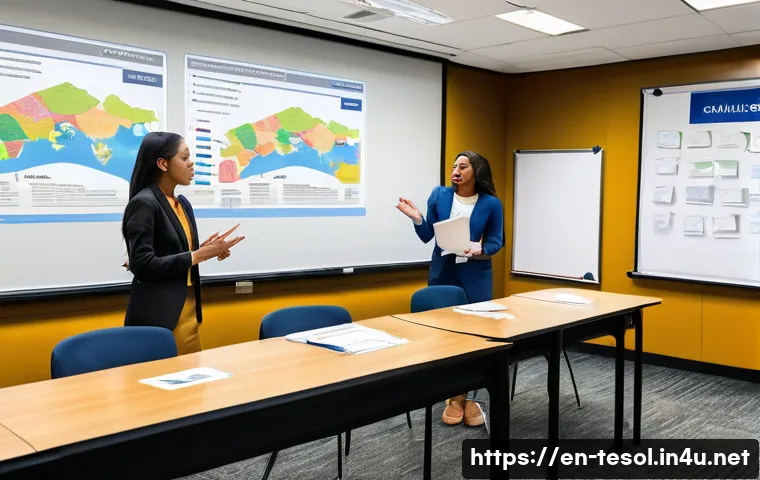
The goal is to move beyond passive consumption to active creation and interaction. I’ve seen firsthand how a well-chosen YouTube clip or an interactive online quiz can spark discussions and deepen understanding far more effectively than a dry explanation.
It’s about creating an immersive and stimulating learning environment that caters to diverse learning styles and keeps students actively involved.
Fostering Cultural Sensitivity and Inclusive Practices
Teaching English means teaching a global language, and with that comes an immense responsibility to foster cultural sensitivity and inclusivity. It’s not just a buzzword; it’s a fundamental principle that shapes how we interact with our students and how we design our curriculum.
I’ve learned that a truly effective TESOL educator isn’t just a language expert, but also a cultural facilitator, someone who helps bridge understanding between diverse backgrounds.
In my practical sessions, we delve deep into this, moving beyond theoretical discussions to explore tangible strategies for creating a classroom where every student feels valued, respected, and empowered to share their unique perspective.
It’s about recognizing our own biases, challenging stereotypes, and designing lessons that celebrate the richness of global cultures. This is incredibly close to my heart because a classroom built on respect and understanding is where the most profound learning truly occurs.
Creating Culturally Responsive Curricula
A culturally responsive curriculum isn’t just about adding a few diverse examples; it’s about fundamentally rethinking how content is presented and whose voices are privileged.
It’s about moving away from an Anglocentric view of the world and embracing a global perspective. I encourage my trainees to analyze their materials critically: Are the characters in the stories diverse?
Do the examples resonate with students from various backgrounds? Are there opportunities for students to share their own cultural experiences without feeling tokenized?
We brainstorm ways to adapt existing materials or create new ones that genuinely reflect the diverse identities of their future students. For example, instead of focusing solely on Western holidays, they might design a project where students research and present on festivals from their own cultures.
This approach validates their students’ lived experiences and makes learning English a vehicle for cultural exchange, not just cultural assimilation.
Promoting an Inclusive Classroom Environment
An inclusive classroom is one where every student, regardless of their background, ability, or identity, feels safe, supported, and able to thrive. This goes beyond just being “nice”; it requires intentional effort and specific strategies.
In our practicals, we explore various techniques for promoting inclusivity: using gender-neutral language, providing differentiated instruction for learners with varying needs, ensuring all students have opportunities to participate, and actively shutting down any form of discrimination or bias.
I often share personal anecdotes about times I inadvertently made assumptions and how I learned to correct them. It’s a continuous learning process. We also discuss how to create a classroom culture where mistakes are seen as learning opportunities, not failures, and where respectful dialogue is encouraged even when opinions differ.
It’s about building a community where everyone feels a sense of belonging.
Navigating Classroom Management with Finesse
Let’s be honest, classroom management can feel like walking a tightrope – one wrong move and you’re potentially losing control, or worse, losing your students’ trust.
For new teachers, this is often one of the biggest anxieties, and I totally get it. I remember one particularly challenging class where my beautifully crafted lesson plan went completely sideways because I hadn’t adequately prepared for managing a group of energetic teenagers.
It taught me a valuable lesson: stellar content means little if you can’t create an environment where learning can actually happen. So, in our TESOL practical sessions, we spend a lot of time on this.
It’s not about being a drill sergeant; it’s about establishing clear expectations, building rapport, and having a toolkit of strategies that allow you to guide student behavior respectfully and effectively, fostering an atmosphere of calm and focused learning.
It’s truly an art form that blends firmness with empathy.
Establishing Clear Expectations and Routines
The foundation of effective classroom management lies in clear expectations and consistent routines. Students, especially language learners who might be navigating a new cultural context, thrive on predictability.
They need to know what’s expected of them, how to participate, and what the consequences are for not following guidelines. I guide my trainees in developing explicit classroom rules collaboratively with their “students” (peers role-playing), explaining the rationale behind each one.
We practice establishing routines for everything from starting the class to grouping activities and ending a lesson. My experience has shown that when these are well-established, many potential disruptions are preempted.
It reduces anxiety for both the teacher and the students, allowing everyone to focus on the exciting business of learning. It’s about creating a structured yet flexible framework that supports everyone’s success.
Building Rapport and Positive Relationships
While rules and routines are essential, the heart of good classroom management is building genuine rapport with your students. If students feel respected, understood, and connected to you, they are far more likely to engage positively and adhere to expectations.
In our sessions, we emphasize strategies for building these relationships: learning students’ names, showing genuine interest in their lives (within professional boundaries), celebrating their successes, and approaching challenges with empathy rather than immediate judgment.
I’ve found that a bit of humor, shared personal anecdotes (appropriately), and simply being present and attentive can go a long way. It’s about seeing your students as individuals with unique personalities and needs, rather than just a collective group.
When they trust you, they’re more open to your guidance, making the entire teaching and learning process smoother and more enjoyable for everyone involved.
Building Resilience and a Growth Mindset in Trainee Teachers
Teaching, especially language teaching, is an incredibly rewarding profession, but let’s not sugarcoat it – it can also be incredibly challenging. There will be days when lessons don’t go as planned, when students are disengaged, or when you feel completely overwhelmed.
I’ve certainly had my fair share of those moments! That’s why beyond teaching pedagogical skills, I firmly believe it’s our responsibility to help future TESOL educators cultivate resilience and a robust growth mindset.
It’s about equipping them not just with lesson plans, but with the mental fortitude to navigate the inevitable ups and downs of the profession, to learn from setbacks, and to continuously evolve.
My goal isn’t just to produce competent teachers, but confident, adaptable, and self-aware professionals who can thrive in any teaching environment and see every challenge as an opportunity to grow.
Embracing Mistakes as Learning Opportunities
Perhaps the most crucial aspect of fostering a growth mindset is learning to view mistakes not as failures, but as invaluable opportunities for learning and improvement.
This applies both to our students and, perhaps even more importantly, to the teachers in training themselves. In our practical sessions, I actively model this by openly discussing my own teaching “oops” moments and how I learned from them.
We create a safe space where trainees can experiment, take risks, and even mess up, without fear of harsh judgment. When a lesson doesn’t go well, instead of dwelling on the negative, we immediately shift to reflective questions: “What did you learn from this?”, “What specific adjustments could you make next time?”, and “How does this experience inform your overall teaching philosophy?” This reframes the entire experience, transforming potential discouragement into proactive problem-solving.
It’s about instilling the belief that learning is a continuous journey, not a destination.
Developing Self-Care and Professional Support Networks
The demands of teaching can be significant, and without proper self-care and a strong support system, burnout is a real risk. This is a topic I feel very strongly about because I’ve seen too many passionate educators fizzle out.
In our practicals, we don’t just focus on the classroom; we also discuss the importance of maintaining personal well-being. We explore strategies for managing stress, setting boundaries, and finding a healthy work-life balance.
More importantly, we emphasize the power of professional networks. Teaching can sometimes feel isolating, but connecting with other educators – sharing ideas, seeking advice, and simply commiserating – can be incredibly validating and empowering.
We encourage trainees to form peer support groups, attend workshops, and engage with online communities. It’s about reminding them that they’re not alone on this journey and that building a community of support is just as vital as mastering any teaching technique.
| Aspect of TESOL Practical Sessions | Key Focus Areas | Expected Outcome for Trainee Teachers |
|---|---|---|
| Classroom Presence | Authenticity, non-verbal communication, energy modulation | Confident and engaging delivery, effective student connection |
| Feedback Mastery | Constructive criticism, peer feedback, self-reflection | Ability to provide and receive growth-oriented feedback, reflective practice |
| Lesson Design | Authentic tasks, cultural relevance, real-world application | Creation of meaningful and engaging lessons for diverse learners |
| Technology Integration | Responsible AI use, multimedia, interactive platforms | Strategic and effective use of digital tools to enhance learning |
| Cultural Sensitivity | Culturally responsive curricula, inclusive classroom practices | Creation of respectful and equitable learning environments |
| Classroom Management | Clear expectations, rapport building, effective routines | Organized, positive, and productive learning atmosphere |
| Resilience & Growth Mindset | Learning from mistakes, self-care, professional networks | Adaptability, continuous improvement, and sustainable career longevity |
Bringing It All Together: A Teacher’s Journey
Whew, what a ride it’s been reflecting on all these crucial aspects of becoming a truly impactful TESOL educator! From finding your voice and energy in the classroom to mastering the art of empathetic feedback and designing lessons that truly resonate, every single piece of this puzzle contributes to the beautiful tapestry of teaching. Remember, this journey isn’t about striving for some unattainable perfection; it’s about continuous growth, learning from every interaction, and always, *always* keeping your students’ needs and experiences at the heart of everything you do. I’ve personally seen how these principles transform hesitant trainees into confident, inspiring teachers, and I can’t wait to see the incredible impact you’ll make in your own classrooms. Keep that passion burning bright!
Essential Insights for Your Teaching Toolkit
1. Embrace Technology, But Don’t Over-rely: While AI and digital tools are fantastic for enhancing lessons, remember that the human connection remains irreplaceable. Use tech to free up your time for more meaningful interactions and personalized support, not to replace yourself.
2. Feedback is a Two-Way Street: Don’t just give feedback; actively solicit it from your students about your teaching style and lesson effectiveness. This not only models good practice but also gives you invaluable insights into how you can improve.
3. Your Classroom is a Microcosm of the World: Foster an environment where cultural differences are celebrated, not just tolerated. Incorporate diverse perspectives, texts, and activities that reflect the rich tapestry of your students’ backgrounds.
4. Self-Care Isn’t a Luxury, It’s a Necessity: Teaching can be demanding. Prioritize your well-being with consistent self-care routines. A burnt-out teacher helps no one, so set boundaries and remember to recharge.
5. Build Your Support Network: Connect with fellow educators! Share your challenges, celebrate your wins, and lean on each other for advice. A strong professional community is an incredible resource for resilience and growth.
Key Takeaways for Enduring Success
As we wrap up our deep dive into what truly makes a TESOL educator shine, it’s clear that a dynamic classroom presence, coupled with a mastery of constructive feedback, lays the groundwork for profound learning experiences. Designing engaging, real-world lesson scenarios that leverage technology wisely ensures our students are not just learning language, but truly living it, and connecting it to their lives beyond the classroom. Crucially, fostering deep cultural sensitivity and establishing an inclusive environment ensures every student feels seen, heard, and valued. Finally, navigating classroom management with a blend of clear expectations and genuine rapport, all while cultivating an unshakeable growth mindset and self-care practices, builds not just effective teachers, but resilient, inspiring leaders who can adapt and thrive no matter what challenges come their way. These aren’t just techniques; they’re the foundations of a rewarding and impactful teaching career.
Frequently Asked Questions (FAQ) 📖
Q: How can we truly bridge the gap between TESOL theory and the sometimes chaotic reality of a language classroom?
A: Oh, this is such a critical question, and it’s one I wrestled with constantly when I was starting out! It felt like I had all these beautiful theories in my head, but then a real class of energetic learners would hit, and suddenly, my perfectly planned activities seemed to melt away.
What I’ve found really works is leaning heavily into experiential learning and mentorship. Think about it: our future teachers need to do, not just read.
This means designing practical sessions where they aren’t just observing, but actively teaching, reflecting, and receiving immediate, constructive feedback.
I’ve always advocated for creating micro-teaching opportunities where they can experiment with different methodologies in a safe, supportive space. Let them try out that new communicative activity, even if it feels a little clunky at first.
The “aha!” moment often comes when they see how a theoretical concept, like scaffolding or task-based learning, actually plays out with real students, even if those students are their peers role-playing.
Structured observation of experienced teachers, followed by detailed debriefing sessions, is also gold. I remember one time, I was convinced a particular grammar explanation was foolproof.
Then I saw a seasoned teacher explain the exact same concept using visuals and movement, and it clicked for everyone instantly. It wasn’t about the theory being wrong; it was about the application.
Finally, don’t underestimate the power of a strong mentorship program, even if it’s informal. Having someone more experienced to bounce ideas off of, someone who can offer a gentle nudge or a pat on the back after a tough lesson, makes all the difference in turning theoretical knowledge into confident, practical expertise.
It truly creates a space where they can apply linguistic theory directly to real classroom scenarios, which is incredibly valuable.
Q: With blended learning and
A: I becoming so prevalent, what are the most impactful ways to integrate these into TESOL practical sessions to prepare future educators? A2: This is where things get super exciting, and a little bit daunting, right?
The landscape of education is changing at lightning speed, and our job is to ensure our future teachers aren’t just keeping up, but leading the charge.
When it comes to blended learning, I always encourage future educators to think beyond just “online homework.” Instead, let’s train them to optimize both modalities.
For instance, in-person time can be invaluable for high-impact communicative activities – think debates, role-plays, and deep discussions where spontaneous interaction is key.
Then, the online component can handle things like content delivery through engaging videos, personalized grammar practice, or collaborative writing projects using shared documents.
This “flipped classroom” approach, where students engage with new content online and use class time for interactive activities, is incredibly effective.
Now, for AI, this is a game-changer! I’ve been experimenting with AI tools for everything from generating varied lesson plan ideas and creating quick, engaging warm-up activities to drafting differentiated reading passages.
Imagine training teachers to use AI to instantly create a dialogue script tailored to a specific cultural background or to simulate authentic speaking scenarios like a job interview.
These tools can save an incredible amount of time on lesson preparation and materials creation, freeing up teachers to focus on student interaction and personalized feedback.
We absolutely need to equip them with hands-on experience in using these AI applications for lesson planning, assessment, and designing interactive learning activities, all while maintaining ethical standards.
It’s not about letting AI teach; it’s about empowering our teachers to leverage AI as a powerful assistant, allowing them to provide more personalized learning experiences and streamline administrative tasks.
Q: Beyond just teaching methodologies, how can we help future TESOL teachers build genuine confidence and adaptability, especially when they’re stepping into diverse and unpredictable teaching environments?
A: Ah, confidence and adaptability – these are the superpowers every teacher needs! I’ve seen so many brilliant, knowledgeable educators stumble simply because they lacked that inner resilience or the belief in their own ability to navigate the unexpected.
My biggest tip here is to foster an environment where mistakes are celebrated as learning opportunities. Seriously! I tell my students that if they’re not making mistakes, they’re not trying hard enough.
When I was a new teacher, I was terrified of making an “oops” moment, but looking back, those were often my most profound learning experiences. Encourage them to keep a “confidence file”—a digital or physical folder where they collect notes from students, positive feedback from observations, or even just reflections on lessons where they felt they truly connected with their students.
It’s a great pick-me-up on challenging days. We also need to instill a growth mindset – the belief that their abilities can be developed through dedication and hard work.
This means setting realistic expectations, praising effort and progress, rather than just perfect outcomes, and avoiding peer comparison. Give them achievable tasks in practical sessions, starting small and gradually increasing complexity, so they build success upon success.
And here’s a big one: encourage self-reflection. After every practical session, or even a mini-teaching segment, prompt them with questions like “What went well?”, “What was challenging?”, and “What will you try differently next time?” This reflective practice helps them understand their own teaching style, adapt to diverse learning styles, and develop that crucial adaptability needed in varied classroom contexts, from managing language barriers to embracing cultural sensitivity.
Ultimately, it’s about empowering them to embrace their authentic selves as educators, because students truly pick up on that authenticity and trust it.